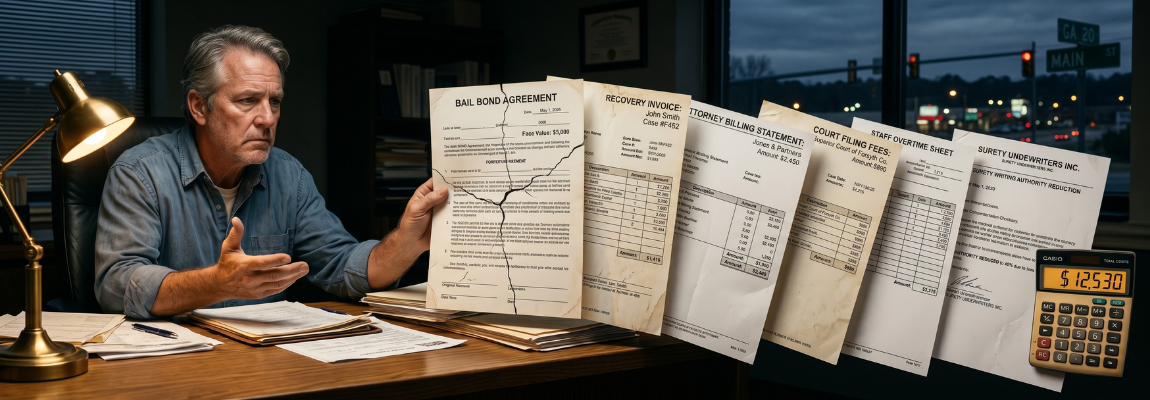

California SB1026, the Bail Fugitive Recovery Agent Reform Act, is the most comprehensive overhaul of BFRA regulation the state has seen since the licensure program was established. It is sponsored by the California Department of Insurance, not a legislator looking for a headline. CDI driving this bill means the department has identified structural gaps in the existing framework it cannot close through enforcement alone and is using the legislative process to close them by statute.
SB1026 is not a routine regulatory update. The bill rewrites how bail fugitive recovery agents are licensed, insured, supervised, and disciplined in California. It passed the Senate Insurance Committee 5-2 on March 25, 2026, then stalled at the Appropriations Committee in May 2026. The California Bail Agents Association is treating the outcome as a defensive industry victory, and the immediate threat to this session is off the table. But the regulatory direction the bill represents is not going away, because CDI does not sponsor legislation it intends to abandon.
Key Takeaways
- SB1026 requires every bail fugitive recovery agent in California to maintain a standalone $1,000,000 liability insurance policy - no policy hopping, no binders, no combined policies. The product barely exists in the commercial market, and the cost will eliminate most independent operators.
- CDI is sponsoring this bill because the existing documentation framework has structural gaps it cannot close through enforcement. The appointment backdating loophole, the absence of verified appointment chains, and the absence of direct CDI disciplinary authority over BFRA conduct are all statutory problems that require statutory solutions.
- Conduct rules move from the Penal Code to the Insurance Code, giving CDI direct disciplinary authority over BFRAs without requiring a criminal conviction first. Fines of $4,000 per offense, capped at $20,000 per proceeding.
- Recovery agent supply contraction means higher per-case costs for bail agencies, increased documentation obligations, and surety scrutiny of recovery practices. Agencies that depend entirely on contract recovery face cost pressure and availability risk.
- California's BFRA regulatory trajectory has accelerated from basic requirements (2012) to comprehensive reform (2026) in four legislative steps. Agencies in other states should be watching this pattern as a leading indicator.
What SB1026 Actually Says
SB1026, the Bail Fugitive Recovery Agent Reform Act, was introduced by Senator Lena Gonzalez on February 10, 2026, and last amended March 24. It is sponsored by the California Department of Insurance, meaning CDI is driving this change. The bill would amend seven existing sections of the Insurance Code, add two new sections, and replace three more. That scope of amendment is not cosmetic.
The bill operates across five primary regulatory pillars. First, every BFRA would be required to maintain a standalone $1,000,000 liability insurance policy, with requirements specific enough to render the entire existing industry practice non-compliant. Second, conduct rules currently embedded in the Penal Code would move to the Insurance Code, giving CDI direct disciplinary authority it does not currently have. Third, pre-apprehension law enforcement notification would shift from verbal notice to mandatory written documentation with defined content requirements. Fourth, the backdating loophole on Notices of Appointment would close, requiring CDI acknowledgment before any appointment becomes effective. Fifth, a two-year continuous California residency requirement would apply to all BFRA applicants and licensees.
For context on where this fits in the regulatory timeline: AB 2029 (2012) established the first statutory requirements for BFRAs, including minimum age and field education hours. AB 2043 (2022) created the formal CDI licensure program and added the initial $1 million insurance requirement, taking effect July 1, 2023. SB 805 (2025) restricted BFRAs from immigration enforcement activities without a judicial warrant. SB1026 closes the structural gaps all three prior bills left open.
The Documentation Gap at the Center of the Bill
Each of SB1026's core provisions addresses a specific structural gap in the existing regulatory framework: gaps that CDI has been unable to close through enforcement because they are written into statute itself.
The existing framework, as strengthened by AB 2043 in 2023, requires BFRAs to submit a Notice of Bail Action before conducting a recovery operation. That notice creates a CDI record establishing who authorized the operation and which bail agent is responsible. Under current statute, however, an appointment becomes effective upon filing, not upon CDI review or acknowledgment of that filing. There is no requirement that CDI formally confirm receipt before the agent is authorized to proceed. That is the gap SB1026 closes.
The bill's language is in Section 1802.1's amended text: notices of appointment "shall not be considered effective until the notice is formally filed with and acknowledged by the commissioner." Submitting the required documentation and receiving CDI's formal confirmation become two distinct steps under the new framework, with the appointment only valid after both are complete. That shifts CDI from passive recipient of notice to active gatekeeper before any operation begins.
The conduct rule migration from Penal Code to Insurance Code addresses a second structural gap the bill targets. Under the existing framework, CDI cannot act on a BFRA's conduct violations until a criminal conviction is obtained. The enforcement mechanism runs through the criminal justice system, not through CDI's licensing authority. Moving conduct rules to the Insurance Code changes that. CDI can assess fines, suspend licenses, and initiate disciplinary proceedings based on documented violations alone, without waiting for a separate criminal proceeding to resolve.
The Insurance Requirement Nobody Can Satisfy
This is the provision that will determine whether most current California BFRAs remain in operation, and describing it as burdensome understates how structurally different it is from existing practice.
The current practice is called "policy hopping." A BFRA who needs to satisfy the existing insurance filing requirement does so by temporarily joining a bail agent's liability policy while contracted for a specific case. The coverage is shared, pooled across multiple agents and personnel on the same policy, and not specifically underwritten for BFRA activities. It satisfies the letter of the existing requirement while avoiding the cost of maintaining a dedicated standalone policy.
SB1026 makes every element of that arrangement non-compliant. The policy must be issued by a California-admitted insurer authorized to write this coverage in the state. The policy must identify the BFRA as the named insured by full legal name and CDI license number, as a natural person. The policy cannot insure any person who is not a bail fugitive recovery agent. The coverage must be primary. A binder is explicitly prohibited from satisfying the requirement. Multiple combined policies cannot satisfy the requirement. Each BFRA is individually responsible for obtaining and maintaining their own policy. The policy period must cover the full BFRA license term.
The commercial insurance product that meets all of these requirements does not currently exist as a standard market offering. Bail fugitive recovery is a high-risk occupation with claims exposure that makes commercial insurers cautious. A standalone policy specifically underwriting an individual BFRA's activities at $1,000,000 per occurrence, issued by a CDI-admitted carrier, is not a product line that most commercial insurers offer today. Carriers may develop this product if SB1026 passes and creates sufficient demand, but the timeline between legislative passage and available, appropriately priced product is uncertain.
The enforcement mechanism for non-compliance is automatic. If a BFRA fails to maintain compliant insurance, CDI provides 30 days written notice to produce proof of compliance. After 30 days without proof, the license is suspended by operation of law, without a hearing. License applicants who cannot satisfy the insurance requirement are denied issuance immediately. Independent recovery agents currently operating on $500 to $1,500 per-pickup fee structures do not have the margin to absorb the annual premium for a specialty standalone policy. The full financial pressure compounds further when those per-case recovery costs are viewed against the complete cost structure of a single forfeiture. The agencies that survive this requirement will be larger operations with the financial infrastructure to access specialty markets or self-insure.
What This Means for Bail Agencies
Bail agencies are not directly regulated by SB1026. The compliance obligations fall on BFRAs. The operational consequences, however, flow directly upward to every agency that depends on contract recovery resources.
The most immediate consequence is supply contraction. The insurance requirement, combined with the two-year residency gate, will remove a significant portion of the current California BFRA workforce from the market. Independent operators who cannot obtain compliant standalone coverage will be suspended. Out-of-state recovery agents who have been working California cases will no longer qualify. The remaining compliant BFRAs will be a smaller pool operating at higher cost, and agencies will compete for access to that pool.
This matters to FTA resolution timelines. The first 30 days after an FTA are where most cases resolve, before a forfeiture can advance toward summary judgment. When the recovery workforce is smaller and more expensive, the speed and availability of recovery resources in that critical early window degrades. Agencies that have built in-house recovery capacity, or that have structured relationships with the BFRA operators positioned to survive the insurance requirement, will absorb this differently than agencies running entirely on informal per-case arrangements.
The second consequence is documentation burden. Agencies will need to verify that every BFRA they appoint maintains a standalone, compliant insurance policy before authorizing recovery work. CDI acknowledgment of the Notice of Appointment becomes a prerequisite, not an administrative formality. The five-year record retention requirement on law enforcement notifications means agencies should be requesting copies of those records from their recovery agents as a matter of course.
The surety relationship dimension follows directly. Agencies that have built strong surety relationships on documented operational performance will be evaluated differently than those whose relationships are primarily transactional. When SB1026 increases the regulatory burden on recovery and the cost per case, sureties will have specific questions to ask about BFRA vetting procedures, compliance documentation, and recovery outcome patterns. Agencies with systematic, documented recovery protocols will be in a different position than agencies operating informally.
The Residency Gate and CDI's New Authority
The two-year continuous California residency requirement eliminates a category of current BFRA operators. SB1026 defines residency as maintaining principal residence and domicile in California, and prohibits designating any other state as state of residence. If residency ceases, the license becomes inactive by operation of law automatically, without a hearing. Agents who relocate must obtain a CDI order to restore the license. The two-year continuous residency requirement also prevents rapid market entry by out-of-state operators who might see opportunity in a thinning competitive field.
CDI's expanded disciplinary authority under the Insurance Code is the more significant long-term structural change. New Insurance Code Section 1816 establishes 13 specific prohibitions for BFRA conduct, covering conduct that ranges from claiming law enforcement status to loitering on properties when the bail subject is not present. CDI can initiate disciplinary proceedings and assess fines: $4,000 per offense, capped at $20,000 per proceeding, based on documented violations alone, without waiting for criminal prosecution.
The written pre-apprehension notification requirement becomes substantially more stringent. Currently, verbal notice to local law enforcement is standard practice. SB1026 would require written notice, submitted prior to and no more than six hours before the apprehension attempt, including the agent's name, approximate entry time, fugitive name, and approximate location. Records of every notification must be retained for five years and produced within 21 days of a CDI request. Social media, text messaging, and internet-based messaging are explicitly prohibited as notification methods for standard (non-exigent) situations.
For agencies managing the compliance blind spots that most operations carry around recovery vendor documentation, SB1026 creates a specific, enumerated list of records that CDI can request, with automatic license consequences for non-production. The documentation obligations are concrete, not aspirational.
When Recovery Costs Rise, Everything Upstream Matters More
The regulatory direction of California's approach to fugitive recovery is not ambiguous. Four major pieces of BFRA legislation in 14 years, each more restrictive than the last, with CDI now sponsoring the most comprehensive reform yet. The bail reform pressure that has been building nationally has moved through California in discrete, escalating steps. The specific insurance requirements and residency gates in SB1026 reflect a regulatory framework that can be adopted by other states with minimal modification.
Within California, the operational question is straightforward: when recovery becomes more expensive and the recovery workforce contracts, what does that do to the cost structure of every bond that forfeits?
The answer runs upstream. Agencies with the strongest underwriting and risk assessment discipline write fewer forfeitures per book dollar. Fewer forfeitures mean less dependency on a recovery market that SB1026 is about to compress. That relationship was already true before this bill moved. It becomes more financially significant after.
The agencies that manage their surety relationships on the basis of documented operational performance will enter the post-SB1026 environment with the credibility to navigate the compliance questions sureties will raise. Agencies whose surety relationships are primarily transactional will face harder conversations.
SB1026 stalled at Appropriations in May 2026, and it matters: the specific requirements in this bill will not take effect this session. But California has been moving in this direction since 2012 in four escalating steps, and CDI sponsoring a bill is not the same as CDI abandoning the structural concerns that produced it. The gaps SB1026 targets: the appointment backdating window, the passive-receipt filing model, the absence of direct CDI disciplinary authority over BFRA conduct, and the inadequate insurance structure, remain in the existing statutory framework. A stalled bill is not a settled question. The agencies that treat this outcome as a permanent reprieve are reading the wrong signal. The agencies that build their operations for the regulatory environment that is clearly coming, whether this bill returns amended or its successor does, will be in the stronger position when it does.
SB1026 stalled. The recovery market pressure it would have created did not. Every underwriting decision carries more weight when recovery is expensive and the available agent pool is thin. IntelliBail's fugitive recovery infrastructure helps agencies build in-house capacity and systematic vendor documentation so they are not dependent on a market that is already contracting.
See the fugitive recovery platform →